Friday, 13 December 2013

A museum of all. The museum of broken relationships

If you ever visit Zagreb, in Croatia, you shall not lose the chance to visit a very peculiar museum: The museum of broken relationships. http://brokenships.com/

Entrance poster
Some old shoes, a coat, a love letter, a special CD, a soft stuffed heart... are some of the objects than can be found and, apparently, have no connexion between them, almost like a 21st Century cabinet of curiosities, more organized and spaced, with white walls and modern supports. Then, with the help of a paper guide, you get to find out of the different sentimental conflicts of each individual person that has left an object there because, in fact, that's a museum which could totally be communal. Real stories from people all around the world, telling us about the pain they suffered when their lover dump them, when they lost love in a war, or the dreadful rage for that person who never treated them as they deserved.


Inside view of the museum

All of it are true stories, lived and explained in first-person narrative for its own protagonists; anyone can leave an object and be able to feel that a part of that person, and a part of that old relationship, lasts in this space.
Inside view of the museum


Broken love letter

More or less poetical, with more discursive coherence or less of it, nastier or not at all, everyone of the donors is free to define their objects in their own way and that definition will not be changed.

We can find, for example, a love letter that was never sent because the lover dumped that person, with an e-mail, before the letter could be sent, and the broken-hearted decided to stick the letter to a glass and breaking it, as a kind of completion ritual.

The initiative was supposed to be the creation of an itinerary exposition that would run around the world before disappear, as so many do. But the need and great success of the idea turned it into a permanent exhibition, which placement was finally decided to be in the old town of the Croatian capital.


View of the city from the Old Town

The development of the project was a participation of two Croatian artists: Olinka Vištica, film producer, and sculptor Dražen Grubisic who, when they broke their relationship, decided to create, half jokingly, a museum to place the personal objects that reminded them of their life together. In 2006, with help from other friends, that project came true and was shown at the 41st Zagreb Salon. It was a huge success, and from Zagreb it went to other Balkan countries, and also Argentina, Germany, Singapore, Indonesia, and many other countries until 2010 with a collection almost as twice as large thanks to the donations that the visitors made in each expo. That same year, the two artists decided they wanted it to be a real museum, permanent, and the rent the space where it is now, this being the first private museum in Croatia. Their originality was awarded in 2011 with the Kenneth Hudson Award.

The museum paper guide
That experience show us that feelings go beyond borders, highlighting its universality: the difficulty of saying goodbye, rage or failed love are the main topics of the museum that can't leave you indifferent and, in fact, it reflects the cultural, political and social tradition of each of the persons who took part on it, turning in public what in theory is meant to be private, creating a space where the line between privacy and the public becomes almost non-existent. You start the guide and you finish it, you won't skip a line because, deep inside, we all like to gossip and look into other people's life.


From all around the world; from Belgrade to Canada and from Indonesia to Mexico, they are ephemeral witnesses of perennial concepts, as are the human feelings, both universal and individual at the same time.

Guiomar Sánchez

Saturday, 30 November 2013

Post-art or the Angus McDonagh case

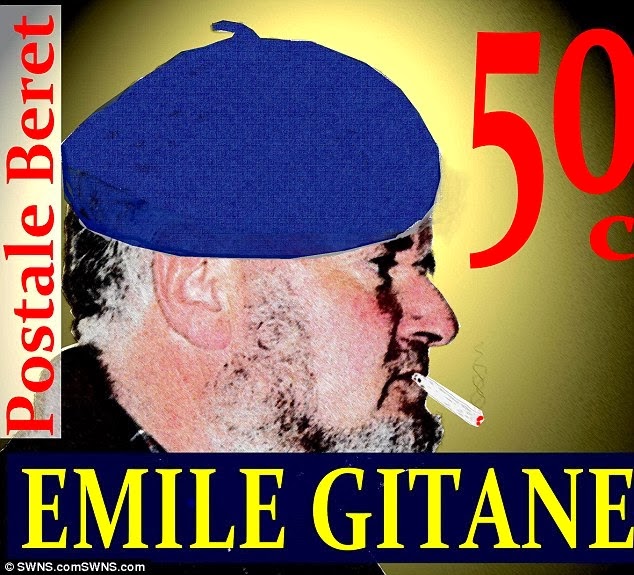
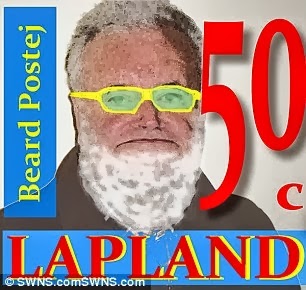
Angus McDonagh works appears with colourful designs and large colour patches that recall Andy Warhol's serigraph printing paintings, it's a branch of the pop-art that we could call post-art. Actually McDonagh's work consist in around 50 post stamps of simple appearance, most of them with his own face on it, and thanks to it this Somerset resident has been able to send letters without spending not even a pound in stamps

His work started as a protest claiming against the extinction of the stamps and ordinary mail on behalf of Internet and social media. “The Queen’s head, it seemed to me, was going to disappear from stamps and be replaced with lots of other images and I felt I had to act” he told a couple of weeks ago in an interview for London free newspaper 'Metro'.

The author created the stamps deliberately with a simple and silly appearance, but still he managed to send more than a hundred letters to destinations as far as Australia, Canada or Hong Kong, with only one of the letters being returned for having a fake stamp. Therefore are we talking about an artist or a scammer? What do you think? Because we know what Royal Mail thinks about it: the British national post company insists it is an offence both the creation or use of fake stamps and so they want to take actions against this case. Although on the other hand it was Royal Mail who was supposed to detect the fake stamps during this last three years.

It should be also said that Angus McDonagh never wanted to avoid the postal costs and he tried to send checks to the post company, but those have been returned. If that is so, instead of a criminal can we see here an artistic protest, a Banksy of the mail services? Or even a better question: Royal Mail's reaction would be the same if it was Banksy whohad  played this “scam”?

Precisely one of the last activities of Banksy in his new period in New York has been to sell his own artworks in a street stand, like the ones that usually sell fakes of his art. What is the difference between them to say that Banksy is an artist and McDonagh isn't? Both of them create original material to supplant as a protest; non of them looks for the economic profit (proceeds from the sale of originals in New York, at $ 60 a piece, were all for the shopkeeper). But beware! Banksy hasn't forced a national company to lose profits, only four strangers who were redecorating their home have lost some money. Does that mean McDonagh is an example that in Art, as in everything, you must be careful who are you protesting against to?


It comes out again the big question “What is Art?” and one of the most plausible and indefinite answers is: “Art is what the somehow (culturally, economically, politically...) more powerful decide that is Art”. It is not everyone's decision, not mine, to decide if McDonagh is an artist, that's a decision for the ones who, sometimes without us knowing completely, decide so much for us. Under that point of view contemporary art is not such a different thing from the Renaissance or Romanticism art, where the great artists were the ones who pleased better their patrons or exalted with better grace the bourgeois class. The trick must be to please who must be pleased and not criticize what mustn’t be criticized.


Ricard Gispert

Saturday, 23 November 2013

Time to be thankful

Thanksgiving is coming, one of those big American things that we know about only thanks to TV series and films, but in the same way that happens with Halloween (originally All Hallows Eve) it is a festivity that Americans had inherited from the European tradition.

Thanksgiving origin can be found in the traditional church masses and religious festivals that were used in this time of the year to thank Lord (or Nature if you prefer a more secular speech) for the harvest success. Those festival, usually joined with great feasts, were also one of the last opportunities to join the social life before the cold winter arrived and became time for family home confinement.

But the 4th thursday of November isn't a too late date to celebrate the harvest? Exactly. That is due to the fact that United States Thanksgiving is influenced by the British tradition in the period of the Protestant Reformation during the reign of Henry VIII. As part of this reformation in 1536 the number of ecclesiastic festivities was reduced from 95 to 27 days per year; but the more radical Puritans didn't agree and wanted to eliminate all the festivities, including Christmas and Easter, and to remain only with Days of Fasting to fight against God's disasters or judgements (as droughts, floods and pests), and Days of Thanksgiving for the little miracles like the victory versus the Spanish Armada or the failure of Guy Fawkes Gunpowder Plot against the British Parliament. This last historic fact became into an annual Day of Thanksgiving since de 5th of November of 1606 and nowadays it's still a festivity (Remember remember the 5th of November).
The first Thanksgiving , J.L. Gerome Ferris (c. 1915)

With this base it couldn't be rare that in 1621 the Pilgrims and Puritans who migrated to the “New World” continued this tradition celebrating Days of Fasting and Days of Thanksgiving, one of which had a special importance at Plymouth, now in Massachusetts State. It was only ten month since the Pilgrims landed and, after the hard previous winter, they were ready to celebrate their first harvest success. Aware that they wouldn't have survive in hostile territory without the native's help they decided to invite the Wampanoag tribe. It were days of feasts and plays, but also of cultural exchange, learning from the others and thanksgiving.

Thanksgiving tradition was already born, more than 400 years from our days, but it still had a long way to run. At the beginning it was only home-made celebrations with still a great remain of the harvest festivals and each State celebrated it on a different day. It wasn't until 1876 when Sarah Hale started a campaign to turn Thanksgiving into a national day, and only 17 years later Abraham Lincoln listened to her ans established November's last Thursday as the National Thanksgiving Day as a treat for the victories of the Civil War.

Finally during World War II there would be one more change for this celebration of humility and gratitude. It was already sometime that the day after Thanksgiving had been established as Black Friday, the beginning of Christmas shopping season with the big department stores offering unmissable discounts. The American National Retail Federation asked president Franklin Roosevelt to enlarge one week the Christmas season and therefore Thanksgiving in USA ended up being celebrated the 4th Thursday of November (in Canada is celebrated the 2nd Thursday of October, as for the different weather the harvest season started earlier).


So there we have another traditional festivity which has been depraved century over century until being turned into something completely different, even if in this case we still have the background of being grateful at least once a year. Cultural Crops wants to be part of this thankful spirit in the air and so we thank you all for reading us and for following us on Facebook or Twitter. Without you it wouldn't be the same, we are working hard to improve and we hope you can all see the results soon.

Ricard Gispert

Sunday, 2 June 2013

Theatre evening

Going to the theatre is a whole experience for me. It is not only to sit on a more or less comfortable sit and watch a play on the stage. There are a lot of little sensations that enhance the theatre experience.

The evening can start easily with your companions having dinner together or sharing some drinks before the play. Usually catching up or any new topic fills the conversation and you almost don't talk about the theatre, it is not time yet.

Afterwards you get to the theatre building, normally with a magnificent entrance. It doesn't matter if the theatre is in the big city or in a country village, the main door has always a look of greatness, full of people and light. For me it has a kind of class that you can not find in the cinema. Even if both of them are cultural business, for me the cinema looks more like an enterprise (more capitalist), more contemporary. The entrance to the theatre, instead, has a more classic feeling, a remain of old centuries, maybe even a bourgeois style. All together it seem VIP, as if it was an elite reunion, even if the audience dresses in the most miscellaneous ways: from the young ones in jeans to the elder marriages dressed up as if they were going to church, or the romantic couples boarding on a date shared with the stage. There, at this cultural VIP entrance, between the lights, the perfumes and a bit of a smell of tobacco is where the theatre experience starts.
Magnificent entrance to the Teatre Nacional de Catalunya (Barcelona)

As it has been said a theatre is a business company, so it is very usual nowadays to find a shop or a stand at the very entrance of the building giving you the chance to buy the booklet or various merchandise. That is also an extra point of the theatre experience. I like to take a look at this little shops even if I won't buy anything. I don't want to buy a t-shirt with the show's poster printed on top, specially if even before buying it I already know it will end up being a summer pyjamas; but instead I like to collect the booklets, this little dictionaries of the play where you can find out a lot of things about the show or the actors, and sometimes they also include interviews to the director or the main stars.

At the shop we can also buy sweets, candy, chocolates or popcorn (although we associate this las ones to the cinema). All of them, anyway, the perfect companion while you access to the stalls area, feeling butterflies in your stomach while you look for your sit. First the row, then the sit number. Dammit! Is in the opposite site. Better if I go back that way. And probably the first thing you do once you are already sit is to look at the stage to see how you see it, if you see it. When you bought the tickets online the row seemed closer to the stage, or the sit more central. That is very possible, the stalls map they show you usually has strange and delusional optical effects. But soon or later you get use to it and you convince yourself that after all you will enjoy a good view of the show.


As the room gets crowded it starts to be loud and quackery. At the beginning it's only a few whispers but soon the voices get louder and for a moment you think you will hear nothing from your far position if they don't shut up all together. That can maybe be followed by a little moment of internal reflection, voluntary or not, when you hope you are going to enjoy the show you have chosen for that evening, and after you realise how much you like this atmosphere and decide you should do your best to go more to the theatre. And while I think about all this feelings and thoughts that the theatre experience brings to me I also think if they are the same for everyone. What are your feelings when you go to the theatre?

But slowly the lights turn off and they take with them all the chatty voices leaving only, again, a whisper in the aire. The curtain opens.

Ricard Gispert

Thursday, 16 May 2013

Go back there!

- Tomorrow I'm going to the Tate Modern.
- I went there three years ago. You're gonna love it!
- Yes, I want also last year. It's great.
- Oh! Then why are you going back?
- ...

Maybe is because I really love museums but I have had this little conversation more than once. There is a lot of people who thinks of museums as collectibles from a catalog: I have visit it, I can cross it now from my list of museums to see, let's go for the next one. If a museum doesn't show temporary exhibitions it almost seems like we should forget about it, as if the permanent exhibition has no more to offer. But is not like that.

The London National Gallery is always adding little artworks
which qualifies its artistic discourse. Go back there!
Usually the “permanent” exhibition of a museum shows only a little part of the collection that they keep in the warehouse, and so the good museums try to have a little rotation with the exhibited artworks. That not only helps to a better conservation of the collection but it also creates an appealing reason for the visitors to come back after a while. Sometimes it is just an artwork replacing another one; but it also can be, and here is where in my point of view the thing gets interesting, a complete new distribution of the artworks. That second kind of change allow us the see again artworks we have already seen, but this time under new perspectives. For example, it could be that the first time we see a certain Caravaggio's still-life the museum shows it in the same room than the other works of the Italian painter, but after some years we go back and we find the same piece surrounded with still-life from other artists. Thereby the first time we see that artwork we perceive it as a part of Caravaggio's work, while on our next visit to that museum we can better appreciate the technical and style differences between all the still-life's.

Bilbao's Guggenheim offer is based on temporary exhibitions.
Go back there! whenever you can.
Besides from that main reason nowadays most museums have also a library open to the public and organize different activities and conferences, some of them even host contests, all of that to remember us that they are there waiting for our next visit. Sure you can also find your favourite museums online, not only with its own web page but also with Facebook and Twitter profiles to keep you informed with their news. Museum shops offer the chance to buy souvenirs with their main artworks on it, exhibition catalogues, books and drawing material; while some big museums have also a coffee shop or restaurant, a good place to host a nice and cultural dinner.


Therefore we encourage you to go back to the museums you have already visit, to repeat if you loved them or to give a second chance if their wasn't what you expected (maybe this time you will feel better in there). 21st Century museums are, or at least they should be, alive institutions, full of life and movement, institutions that change, offer activities and want to interact with the audience. In my own experience there are museums where I have discover a new thing with every new visit. Take the chance this weekend with the International Museum Day and discover, or even better re-discover, the museums in your city.

Ricard Gispert

Saturday, 11 May 2013

The riddle of modernity

The concern for being modern, for being trendy, it's not only a human life condition; it also happens in literature, for example all the novels with the same subject that came out after the success of a best-seller or even the fan-fics are a prove of that. But that concern can also be found in art subjects. That's how the different art movements arise: someone inspired tries to be original and changes the rounded arches for the highest lancet arches giving way from the Romanesque to the Gothic architecture; Edouard Monet started to paint outside instead of being closed in his study, his fellow contemporaries liked it and copy it. Originality becomes trendy and that is only break again when someone else original appears. That explains why we remember the virtuous who generate changes but most of artist who copy the new style just remain anonymous forever. Nothing ventured, nothing gained.

African masks/ a portrait by Pablo Picasso
But also at the same time in art, like in trends, everything is cyclical. The bell-bottom trousers are back, or the thick plastic frame glasses... The old stuff that once was left aside is now original again. Otherwise what is vintage fashion? Well then in art it happens exactly the same: the Renaissance raises the balance and harmony typical of the Greece-Roman classic art, afterwards it comes the Baroque filling up everything with ornaments and recharged compositions that will only stop with the Neoclassicism, a new return to Greece-Roman art. Thus century after century, cycle after cycle, we arrive to contemporary art, which seems to ignore the cycle: everything is innovation and every new change looks like a complete break with all previous art. Precisely “break with everything” was the idea that contemporary artist had in mind; but intentionally or not it all still feels like a return to earlier periods. Art feeds itself. Pablo Picasso's cubism is inspired in the African traditional masks while Andy Warhol's works, despite the innovation of the technique, are just new interpretations of the portrait and the still-life, two of the main topics in Baroque paintings.

The physical impossibility of death in the mind of someone living, Damien Hirst (1991)
And that's how we get to Damien Hirst, a very controversial British artist in recent decades for his work with dead animals preserved in formaldehyde. Death, the main topic in Hirst's artworks, has always been deeply laden with symbolism and a strong personal meaning. A lot of artworks talk about death, but if we use death as a tool and not only as a theme: outrage! A lot of people would say “that is not art”. Aberrations of contemporary art! But, oddly, Damien Hirst hasn't been the first one in using corpses to express himself artistically. To prove it we invite you to go to Rome and visit Santa Maria della Concezione dei Capuccini's crypt. The brave who dare to go in will discover a peculiar 17th Century decoration which the Cappuccin monks made with the bones of its ancestors: skeletons turned into statues, altars made entirely with skulls, barrel vaults decorated with tibias and pelvis... It has nothing to envy to Hirst's shark in formaldehyde.


That is the riddle of modernity: what it's now modern is what it used to be old. Two opposite poles which are touched by the tips. So now we invite you to play a little game with the comments. Help us find more examples of modern art that can be linked with ancient art.

Ricard Gispert

Tuesday, 30 April 2013

Shirts, oak trees and social art

"The Blue Route", Kaarina Kaikkonen (2013)
at Fabrica space in Brighton & Hove
During this May it will be easy to find clothes hanging on the street of Brighton & Hove coinciding with the Brighton Festival. That will be the second part of the installation “The Blue Route” which is already on display at the Fabrica gallery. The project started with the Brighton Dome collecting old shirts from the citizens, as the Finnish artists Kaarina Kaikkonen works always with second-hand everyday objects, and it's her work to later on create this sort of collage with the clothes that match her design.

Why shirts? Easy. Because, in Kaarina Kaikkonen's own words, “a shirt is the closest to the heart. The person is there.” Such a bucolic step from the intimacy of a personal shirt to the opposite immensity associated to the colour blue that names the artwork; but in this way, once the work is finished, the spectator not only can play to find its shirt between the crowd but also ends up finding himself as part of the artwork, giving to it new subjective interpretative values. However, the citizen who has give his shirt will become also part of a social workshop once the Brighton Festival is over: all the shirts collected, the ones finally used in the artwork and the ones excluded, will be given to Oxfam. So in this case the social function of the art turns into a practical side.


Joseph Beuys' rocks at Documenta 7
as he left them
Art has always had this social function, either extolling the virtues of a particular social class as in more traditional artistic performances or as a criticism of social and political systems, a concept much more contemporary; but there are not that much the artworks in which the social function implies something beyond the concept like giving more than 100 shirts to charity. Perhaps one of the first remarkable examples of this kind of art are Joseph Beuys' “social sculptures”, a true believer in art as a power for the revolutionary change. 


Once moved the rocks and oak tree was
 planted next to their new location

Thus in the Documenta 7 in 1982 Beuys spread a pile of basalt rocks, which from an air-view could be seen as a big arrow pointing an oak tree that he had planted. Afterwards he announced that the rocks should only be moved if they planted an oak tree to its new site. As a result of this initiative 7,000 oak trees were planted in Kessel, Germany. I can be said that the social and environmental change that Beuys sought was more than achieved.


So let's not participate a little in the comments below: what do you think about “social art”? Do you know any other artworks like that? In which art social project would you like to take part? Or which one could we create ourselfs?


Ricard Gispert
@ricardgispert