Saturday, 15 March 2014

Then

During the last month of February it was held in London the second edition of the Waterloo Vaults Festival. For six weeks the labyrinth of tunnels under Waterloo station were filled up with concerts, art and alternative theater. We enjoyed so much Then, the new show written by and starring Yve Blake supported by the Young National Theatre Studio.

Entrance to the Waterloo Vaults Festival


The stage is almost empty: a microphone stand, a computer, a projector and a curtain for the few but effective costume changes. But as soon as the show begins Yve Blake takes care of covering the entire stage with monologues, interacting with the projections, singing, dancing... and she even dares to go with rap!
The show begins with three questions: Who are you? Who you'll be? And, most important, who you used to be? It is from this last question that the the full show is developed. We are always the same throughout our lives? Or the situations we live make us change gradually while we grow up? Then talks about the past we used to live in, but also invites us to reflect on what this implies about changes and about life .
The project started well before staging with the creation of the website Who Were We where people around the world was invited to anonymously submit their stories, pictures or memories about the people who they used to be in the past. From there the artist created a speech including more than a hundred of the stories received to make us think about ourselves, as most of them are stories which anyone can feel identified with, putting aside a comedy look that turns the reflection in a fun and entertaining show.

Promotional image for the show
Many of the stories are read by the interpreter from behind her computer, some of them accompanied with images from the projector, while others are put together into songs linked by themes and tidying up the speech by age of this past persons. So throughout the show we see our thoughs when we were infants, how we saw the world when we went to school and the problems of becoming a teenager. The last part of the show, however, brings together the reflections of older people who also collaborated on the website and give us an idea of how they see it was their life when they were 20, 30 or 40 years old.
One of the positive parts of this structure is the increase in the intensity of emotions. Leaving the reflections of older people for the end of the show allows it to start in a much lighter and fun way, including the preference for sandwiches without crust, to gradually pass to the typical adolescence body concerns and self-acceptance. Getting to the end of the show one of the most tender and sweet songs is “You grow me up, now I'll grow you down” where, without leacing completely aside the bold and fun touch of the show, we can reflect about elderness and how generation after generation some help us to make the road to success in life while in exchange, sooner or later, we will have to help them rid the road of life.

Finally, the show concludes with a final song bringing the most interesting responses to this particular question from the site : If you had five minutes with your past you, what would you say? We invite you to answer it yourselfs.


Ricard Gispert
@ricardgispert

Tuesday, 25 February 2014

Discussing Lichtenstein

Roy Lichtentein (1923-1997) was an American Pop Art painter, graphic artist and sculptor, specially known for his large scale representations of comic art; but today at Cultural Crops we want to debate whether an artist can be considered as it or not.


Ricard Gispert: From all Lichtenstein professional career we can only think of him as an artist for the works in which he is author of all the material, the ones in which he hasn't borrowed anything from any comic strip. In all those other cases the artist is the cartoonist, the comic drawer who had created original contents using his own technique and stile, different from other comics. It is not totally a plagiarism because Lichtenstein does make changes on the artwork, but it is true that the cartoonist like Irv Novick or Jack Kirby should take credit for the work. They are the ones who should enjoy the fame and money.

Guiomar Sánchez: ‘Good artists borrow, great artist steal’. It was said by Picasso that the true genius was to know how to flip what has already been done, and it could be said that, perhaps, in art we can never ever speak about “original content” or at least virgin on form or concept. It will always have been done before, the primal idea from which the artist starts to create his own concept will have been conceived before. We have quite clear examples in the same Picasso with Les Demoiselles d'Avignon, “copying” or better said “seizing” from African masks and Romanesque eyes. This past that moves towards creation appears also inside artworks, more or less clear, showing gratitude for the referent, or even a criticism, as for example Manet's Balcony, by Magritte, when Manet had also inspired himself in Goya's balcony.

RG: Totally agree: gratitude as a result of admiration or the criticism of an artist justifies the inspiration in the masters that precede us; but the difference in Lichtenstein artwork is that he imitates other artists as a support for his message, not as part of the message. As you have properly indicate he is not the first author looking at others' work to keep his own moving forward, and I will even go further taking as example Miro's Intérieur Hollandes or Las Meninas by Picasso, trully copies of the homonyms artworks, but in this cases the copy is part of the message: homages to great painting masters read under the filters of contemporary art. However to make an homage to an artist this one must have a certain fame, but what Lichtenstein does is to take advantage of other people's work who has less popularity than him without not even giving an artistic value to this appropriation.

GS: It has nothing to do, on my point of view, the fact that those artist are less popular. Lichtenstein uses comics as an artistic purpose and, indirectly, involves comic culture, playing with an everyday element as it was typical in Pop Art. Referencing again to Picasso, remembering the famous cubist faces, he extracts this idea from African masks, the author of those we don't even know who might be, because that culture doesn't care about authors as mush as we do in Occident.

RG: But still the difference between Picasso and Lichtenstein is that the first one extracts an idea from African art, as you have said, while the other one copies entirely fragments of comics drawn by other authors. It is not only an inspiration in other people's work, even if sometimes he does collages with fragments from various comics. Another important difference is that any book or Internet source will explain how the cubist artist based his faces on African masks, while very few are the sources where it is said in which authors was based Lichtenstein work, you must feel lucky if you find a reference to DC Comics. So if we highlight Lichtenstein as an artist we must do so with Jerry Grandetti, Russ Heath and so many other comic artists.

GS: The fact is, I think so, comic and its authors had never been considered artists, but it was seen as a simple entertainment. Lichtenstein artworks push comic aesthetic to an art level and somehow, even without quoting their names, is extolling this authors and the symbolism of comic's world, giving way to a global recognition that they didn't use to have.

RG: Yes, we can agree that it extols comic's symbolism, but not the authors, as so many of them still remain anonymous nowadays. However it is also true, as you have well indicated, that History of Art feeds itself, evolving to present new artists ans styles, and seeing it that way Lichtenstein is a one more piece of this big puzzle that is contemporary art.

GS: Well, is perfectly understandable your position, specially because of the injustice it suppose, by the artistic institution and society at large, the treatment received by comic authors, who has been relegated to the background or even labelled as simple entertainment. It should be given – or maybe Lichtenstein should have done that – a higher treatment to this kind of handwork – labelling it as art – that has been a referent for great artists.

#1yearCC

Ricard Gispert

Guiomar Sánchez

Saturday, 15 February 2014

Museum or not?

A museum is a non-profit, permanent institution in the service of society and its development, open to the public, which acquires, conserves, researches, communicates and exhibits the tangible and intangible heritage of humanity and its environment for the purposes of education, study and enjoyment.
If we assume that this ICOM (International Council Of Museums) definition of a museum attaches and educational and study purpose, which means the museum can be seen as a tool for knowledge; can museums be based on any subject? The evolution of museums from the little cabinets of curiosities to the actual idea of museum has left us with the most odd institutions: a museum of bad art in Massachusetts, one about phallus in Iceland, another one all about carrot in Belgium or a Turkish museum of human hair, including of course the museum of broken relationships that has already appeared previously in this blog. But all of them are institutions focused in a very specific field of knowledge, so they still meet the requirements to be called museums.
Let's go now one step farther and take a look at the wax museums: the educational purpose starts to be less clear. Which useful knowledges can we get from seen famous people turned into wax figures? Figures that, in addition, represent only a particular moment in the life of the represented celebrity, as if it was a 3d photography that will never get old or change the hair style. We could also open a Museum of Famous People to simply fill up the walls with pictures of famous people classified according to their professional area, and that would give us the same study and knowledge than a wax museum. What it is then that gives the wax museum its quality as a proper museum? The answer is the history of wax figures which, even if nowadays are only an entertainment, have their origin in the Middle Ages when it was used as a corpse substitute in the European kings' funerals.
Finally, there is one cas I have known about recently even if it has been active since 2007 at Kentucky (USA), and I still doubt it can be called museum: the Creation Museum o museum of the creationists, which explaines and stages the Bible to get to answer the typical questions that make anyone doubt about God's power and word. We are not going to mess now with religious matters and I don't see anything wrong in using an institution with high resloution videos, animatronics and a planetarium to approach the Bible (leaving aside the irony because of the eternal fight between science and religion); but what have dinosaurs to do in all that matter? According to the Creation Museum “biblical history is the key to understanding dinosaurs”.


Dinosaurs were created the sixth day, at the same time than humans and all the other animals (if we haven't found evidences of human bones next to dinosaur bones to prove the coexistence is only because they were buried separately), and, as they were all at the Garden of Eden with Adam and Eve, they were all vegetarians, ad before the “fall of men kind” no animal died, specially not as food for the others. Dinosaurs were inside Noah's Ark, absolutely all kind of dinosaures (“probably about 50”) as they were not that big. They, in fact, survived the Flood Myth, as it is proved by the existence of dragons in the Middle Ages, but they were extinguished because of the climate change and the humane diseases.


Where is the educational and study purpose? Where is the knowledge after a visit to the Creation Museu? What can be learnt? The treatment that his dinosaur sections receives is as valid as it would me a museum about unicorn's extisntion or about vampire wars in Mexico. It is not the topic what is wrong but its treatment. A museum about vampires is completely justifiable as long as it sticks to the knowledges we have about this mythological race, pointing the legends that rise this believing and its influence in cinema, but the educational and study purpose is lost when reality and fantasy get mixed together. In the same way there will be no possible objection against the Creation Museum if it could prove his speech against all scientific theories about dinosaurs. What do you think? You take it as a museum or not? Do you know any other examples of museum that doesn't provide any knowledge? 


Ricard Gispert

Saturday, 18 January 2014

Wooden Horses


Chinese New Year is near and with it also its celebration worldwide to welcome the year of the horse. Precisely for that reason the British sculptor James Doran-Webb has created a big sculpture for the ceremonies at Singapore. Each one of this horses weighs 500kg, supporting the weigh of up to four persons, and it took a total of six month to make this puzzles of more than 400 pieces of driftwood, even having an interior skeleton of stainless steel.

Driftwood sculptor is how Doran-Webb defines himself, but his relationship with this material started long before than his artistic career as his parents had an antique restoration workshop and he owned a little weekend stand on Portobello Road's market (London) when he was a teenager. 

In 1989 he travelled to the Philippines, where popular art and culture of the archipelago awakened in him an interest for the work with driftwood. This wood from trees of various species come to the rivers ans beaches banks, washed and processed by the waves and salinity, and making each single peace, whatever its size, a particular and individual form the rest.

The next year, in 1990, Doran-Webb started to import to Europe thanks to a design company: boxes and frames inlaid with shells or marbles, papier-mâché animals and some furniture made from recicled wood from the Philippine houses. However it wasn't until the beginning of the 2000 decade when he thought about designing furniture directly with driftwood.

It was playing with driftwood pieces for that furniture how he end up making his first animal sculpture. Later on the big amount of driftwood he had available allowed him to make works of different sizes, just playing and combining the forms and characteristics of each one of the pieces to give movement and vitality to his creations.


The very first thing we should say about James Doran-Webb work is the double game, thus from far in the distance it seems like what you see is an animal, or at least a uniform bloc of mass, but when you approach the sculpture you can observe how the whole is made from hundreds of little parts, and even the driftwood colors are used to enhance the artistic quality. It is also very interesting this step forward from furniture to animal sculptures, because that way nature is no longer a tool serving the human kind for its pleasure and commodity, it becomes an expression of itself. With nature it is created another representation of nature, in a way that we could also include here atomic theories: this little parts of wood become one thing or another depending on how are they combined between them. Finally, the fact of creating only animals gives vitality to his productions. The main material for his artworks is wood – wood than once was part of a living being but has went to a process of death and transformation – but from this material we only get again representations of living beings. So in some way that death wood get an allegorical second life: a life, in that case, engaged to beauty and art.


Ricard Gispert

Saturday, 11 January 2014

London Unknown

London is a big city which drags more than 14 million tourists a year, but it is such a big city that with one visit barely can be copsed a little part of the whole. British Museum, National Gallery and Tate (Modern, not “the other one”) are the undeniable Top3 for the visitors around the globe, but today we are proposing you a Top10 beyond the tourist crowds at the more popular places. Here you have our list of 10 hidden gems that you could see on your next visit to The City.

A small church down town, right next to Piccadilly Circus. Its sober outside serves as placement for a dairy market (food, antiques and collectibles, arts and crafts...) while its interior hosts evening concerts. Free entrance.

This high class north-eastern neighbourhood has always been residence for the intellectual elite. Nowadays commerce and restaurants are the main appeal even if it is also nice to just walk around. And for nature lovers just walk a few more minutes up to Hampstead Heath and enjoy the view or have a fresh bathing in one of the three lakes that serve to that purpose.

What can be more interesting than visiting a museum? To visit one as how it was in 1830. When he died, the architect Sir John Soane had disposed his home-museum should remain untouched, although the museum concept of that century is far different from the actual British Museum. 13 Lincoln's Inn Fields is a house full of the worldwide discoveries of the architect and his own models of the old roman temples. Free entrance.

You must pay to access the courtyard where you can take a picture of you with a foot on each side of the 0 meridian, but the visit to the Astronomy Centre is free entrance. Also there is a huge park to enjoy in sunny days and, again, great views. The best way to get there is with the DLR, a train without conductor which you can catch at Bank station, and you can take the chance to visit also de National Maritime Museum.

Westminster Cathedral, not to be mistaken with Westminster Abbey, is a Neo-Byzantine building quite near of Victoria Station. It is surprising when you find it as it doesn't seem to fit in its surroundings. Inside, the big coloured marble columns contrast with the vaults of blackened bricks, while the chapels are decorated with mosaics enriched with gold leaf. Free entrance.

Whether you like literature or not we invite you to step in this Victorian house where Dickens used to live. The various rooms seem intact while you discover not only life facts of the famous writer, whose life was closely related with his works, but you also see how was life in any London house of that period. Entrace: 8 pounds.

The most notable part of this war museum is the section about the Holocaust, actually the longest of its exhibitions which includes even a final reflection about what could have done Great Britain to avoid that situation. Now, however, it is close for a renovation that will see the light this summer to celebrate the centenary of First World War.
It is also part of the IWM family the Second World War battleship HMS Belfast and the Churchill War Rooms where the British Prime Minister sheltered during that same conflict; but while the museum is free entrance the other two have an admission charge.

This is not a market like Camden or Portobello Road, is one of the oldest food markets in London. Under its typical structure of cast-iron architecture you can find wine, sausages, meat and fish, fruits and vegetables, different products like truffle oil or cheese with walnuts and quirky products like grass juice and zebra or crocodile hamburgers. It is a good place where to have lunch, as it is close to the Tate Modern and The Shard, the new tallest building of the city. You can try the traditional English pies or south-Asian deli, and end your feast with sweet pastries, chocolates or the typical British fudge.

In this Tudor palace there are always very interesting temporary exhibitions, keeping a balance between free and charged entrance. The permanent collections, which includes artworks from Da Vinci, Manet, Van Gogh and Picasso among others, can be found at the Courtauld Gallery. The entrance to this gallery is 6 pounds, but Mondays is half price.

The museum of history of the city, the best place to learn about London's evolution from the neolithic settlements and the Roman foundation until the present day. Museography is somewhat uneven because in occasion of the Olympic Games it was specially reinforced the dialogue in the segment of Roman history of the city. However must also be mentioned the audiovisuals about the two big Middle Age crisis (Black Death and 1666's Great Fire) and the space recreations: a prison, a Victorian Market or a cinema from the beginning of 1900's among others. Free entrance.
This museum is next to the Barbican Centre, a cultural centre with a very interesting calendar of temporary exhibitions, conferences and dance shows.

Ricard Gispert

Friday, 13 December 2013

A museum of all. The museum of broken relationships

If you ever visit Zagreb, in Croatia, you shall not lose the chance to visit a very peculiar museum: The museum of broken relationships. http://brokenships.com/

Entrance poster
Some old shoes, a coat, a love letter, a special CD, a soft stuffed heart... are some of the objects than can be found and, apparently, have no connexion between them, almost like a 21st Century cabinet of curiosities, more organized and spaced, with white walls and modern supports. Then, with the help of a paper guide, you get to find out of the different sentimental conflicts of each individual person that has left an object there because, in fact, that's a museum which could totally be communal. Real stories from people all around the world, telling us about the pain they suffered when their lover dump them, when they lost love in a war, or the dreadful rage for that person who never treated them as they deserved.


Inside view of the museum

All of it are true stories, lived and explained in first-person narrative for its own protagonists; anyone can leave an object and be able to feel that a part of that person, and a part of that old relationship, lasts in this space.
Inside view of the museum


Broken love letter

More or less poetical, with more discursive coherence or less of it, nastier or not at all, everyone of the donors is free to define their objects in their own way and that definition will not be changed.

We can find, for example, a love letter that was never sent because the lover dumped that person, with an e-mail, before the letter could be sent, and the broken-hearted decided to stick the letter to a glass and breaking it, as a kind of completion ritual.

The initiative was supposed to be the creation of an itinerary exposition that would run around the world before disappear, as so many do. But the need and great success of the idea turned it into a permanent exhibition, which placement was finally decided to be in the old town of the Croatian capital.


View of the city from the Old Town

The development of the project was a participation of two Croatian artists: Olinka Vištica, film producer, and sculptor Dražen Grubisic who, when they broke their relationship, decided to create, half jokingly, a museum to place the personal objects that reminded them of their life together. In 2006, with help from other friends, that project came true and was shown at the 41st Zagreb Salon. It was a huge success, and from Zagreb it went to other Balkan countries, and also Argentina, Germany, Singapore, Indonesia, and many other countries until 2010 with a collection almost as twice as large thanks to the donations that the visitors made in each expo. That same year, the two artists decided they wanted it to be a real museum, permanent, and the rent the space where it is now, this being the first private museum in Croatia. Their originality was awarded in 2011 with the Kenneth Hudson Award.

The museum paper guide
That experience show us that feelings go beyond borders, highlighting its universality: the difficulty of saying goodbye, rage or failed love are the main topics of the museum that can't leave you indifferent and, in fact, it reflects the cultural, political and social tradition of each of the persons who took part on it, turning in public what in theory is meant to be private, creating a space where the line between privacy and the public becomes almost non-existent. You start the guide and you finish it, you won't skip a line because, deep inside, we all like to gossip and look into other people's life.


From all around the world; from Belgrade to Canada and from Indonesia to Mexico, they are ephemeral witnesses of perennial concepts, as are the human feelings, both universal and individual at the same time.

Guiomar Sánchez

Saturday, 30 November 2013

Post-art or the Angus McDonagh case

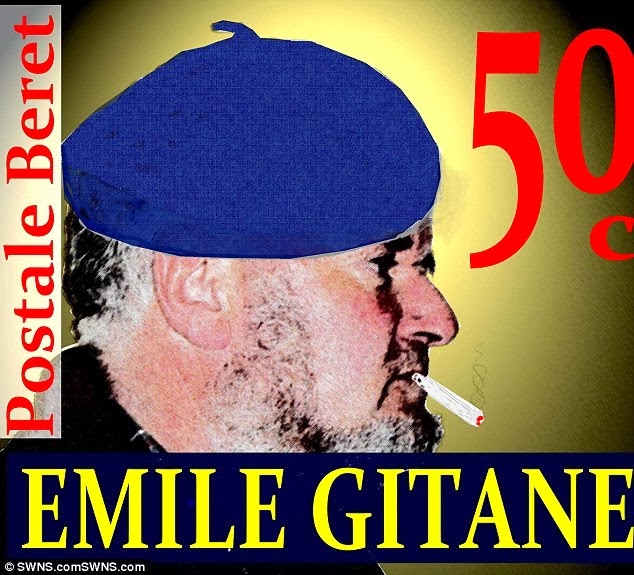
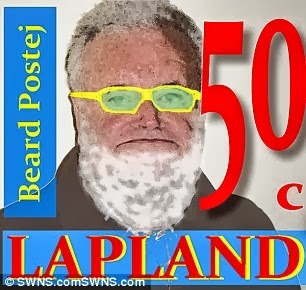
Angus McDonagh works appears with colourful designs and large colour patches that recall Andy Warhol's serigraph printing paintings, it's a branch of the pop-art that we could call post-art. Actually McDonagh's work consist in around 50 post stamps of simple appearance, most of them with his own face on it, and thanks to it this Somerset resident has been able to send letters without spending not even a pound in stamps

His work started as a protest claiming against the extinction of the stamps and ordinary mail on behalf of Internet and social media. “The Queen’s head, it seemed to me, was going to disappear from stamps and be replaced with lots of other images and I felt I had to act” he told a couple of weeks ago in an interview for London free newspaper 'Metro'.

The author created the stamps deliberately with a simple and silly appearance, but still he managed to send more than a hundred letters to destinations as far as Australia, Canada or Hong Kong, with only one of the letters being returned for having a fake stamp. Therefore are we talking about an artist or a scammer? What do you think? Because we know what Royal Mail thinks about it: the British national post company insists it is an offence both the creation or use of fake stamps and so they want to take actions against this case. Although on the other hand it was Royal Mail who was supposed to detect the fake stamps during this last three years.

It should be also said that Angus McDonagh never wanted to avoid the postal costs and he tried to send checks to the post company, but those have been returned. If that is so, instead of a criminal can we see here an artistic protest, a Banksy of the mail services? Or even a better question: Royal Mail's reaction would be the same if it was Banksy whohad  played this “scam”?

Precisely one of the last activities of Banksy in his new period in New York has been to sell his own artworks in a street stand, like the ones that usually sell fakes of his art. What is the difference between them to say that Banksy is an artist and McDonagh isn't? Both of them create original material to supplant as a protest; non of them looks for the economic profit (proceeds from the sale of originals in New York, at $ 60 a piece, were all for the shopkeeper). But beware! Banksy hasn't forced a national company to lose profits, only four strangers who were redecorating their home have lost some money. Does that mean McDonagh is an example that in Art, as in everything, you must be careful who are you protesting against to?


It comes out again the big question “What is Art?” and one of the most plausible and indefinite answers is: “Art is what the somehow (culturally, economically, politically...) more powerful decide that is Art”. It is not everyone's decision, not mine, to decide if McDonagh is an artist, that's a decision for the ones who, sometimes without us knowing completely, decide so much for us. Under that point of view contemporary art is not such a different thing from the Renaissance or Romanticism art, where the great artists were the ones who pleased better their patrons or exalted with better grace the bourgeois class. The trick must be to please who must be pleased and not criticize what mustn’t be criticized.


Ricard Gispert